Vintage Beach Font Review
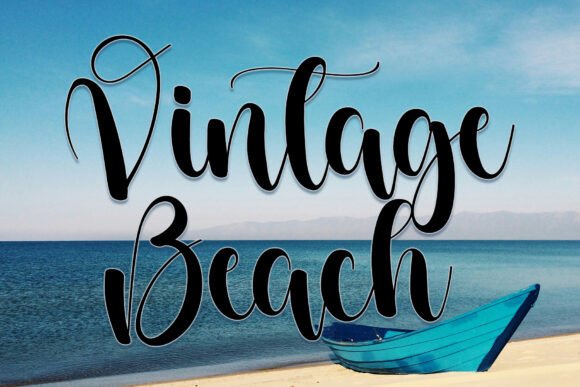
As a web designer, I often find myself searching for the perfect typeface to bring a project to life. Vintage Beach has quickly become one of my go-to fonts for its elegant balance of vintage charm and modern clarity. It’s the kind of font that feels both familiar and fresh, making it ideal for creative websites, branding projects, and digital content where personality matters.
A Perfect Fit for Digital Branding
I first tested Vintage Beach on a boutique online store’s hero section. The font added a warm, inviting feel that complemented the brand’s aesthetic without overpowering it. Its soft curves and subtle variations gave the text a handcrafted quality, which was exactly what the client wanted for their handmade goods. Whether used in headers, call-to-action buttons, or promotional banners, Vintage Beach maintains a high level of visual appeal while staying readable on various screen sizes.
One of the things I appreciate most about this font is how it adapts to different design contexts. On a dark background, it still holds up well, and on light backgrounds, it adds a touch of sophistication. It’s not overly ornate, which makes it versatile for both minimalist and more elaborate designs.
Responsive Design and Mobile Usability
Testing Vintage Beach on mobile devices was a key concern. I placed it over an image banner on a product landing page and found that it remained legible even at smaller sizes. The font’s open spacing and clear letterforms make it suitable for mobile-first layouts, ensuring that users can easily scan and engage with the content.
For buttons and CTA elements, I paired Vintage Beach with a clean sans serif font. This combination created a nice contrast, allowing the decorative font to shine without sacrificing readability. It also helped maintain a strong visual hierarchy, which is essential for user experience and conversion rates.
Use Cases for Web Design
Vintage Beach excels in areas where a personal touch is needed. I’ve used it for blog headers, portfolio titles, and course landing pages, where it brings a sense of creativity and authenticity. It works especially well in hero sections, where a bold, eye-catching headline can make a lasting impression.
For a coaching website, I applied it to the main title and subheadings. The font added a professional yet approachable vibe that aligned with the brand’s message. It also paired beautifully with a simple serif font for body copy, creating a cohesive and visually pleasing layout.
On a digital ad campaign, I experimented with using Vintage Beach as a decorative accent over images. The result was striking—each element felt intentional and cohesive, reinforcing the brand’s identity without overwhelming the viewer.
When Not to Use Vintage Beach
While Vintage Beach is a powerful tool for display typography, it’s not ideal for long paragraphs or dense text blocks. Its decorative nature can make it harder to read when used in body copy, especially on small screens or in low-contrast environments. For these cases, a clean sans serif or serif font would be a better choice.
It also isn’t the best option for navigation menus, form labels, or other interface elements where clarity and efficiency are critical. In those situations, a more straightforward typeface ensures usability and accessibility.
Font Pairing and Web Integration
Pairing Vintage Beach with other fonts opens up a range of design possibilities. I often use it alongside a simple sans serif for body text, allowing the decorative font to serve as a focal point. This pairing works well for landing pages, portfolios, and brand kits where a mix of style and functionality is needed.
For editorial-style websites, combining it with a serif font creates a classic, refined look. This is great for blogs, magazines, or content-heavy sites where a traditional aesthetic is desired. The key is to use Vintage Beach selectively, reserving it for headings, logos, and other prominent elements.
Before integrating Vintage Beach into a project, I always check the available styles, weights, and file formats. Ensuring that the font is properly licensed for commercial use is also crucial, especially when working on client websites or e-commerce platforms.
Final Thoughts
Vintage Beach is a standout font for web designers looking to add character and warmth to their digital projects. Its balanced design and versatility make it a valuable asset in a wide range of applications—from hero sections and landing pages to brand identities and marketing campaigns. While it may not be the best fit for every use case, its charm and clarity make it a top choice for creative and expressive web design.